Addressing Mental Health Stigma and Claim Validity

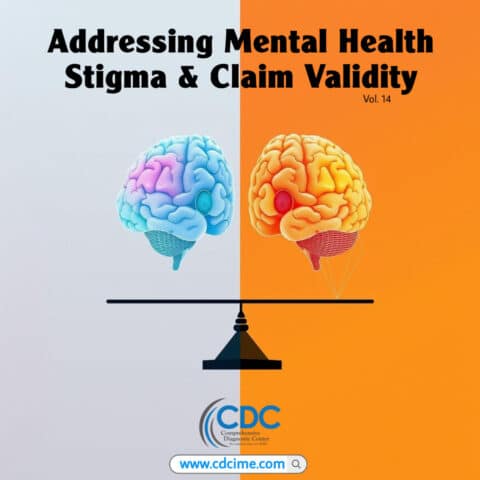
Mental Health Awareness Month in May shines a spotlight on reducing stigma and validating mental health experiences. In workers’ compensation, personal injury, and disability claims, psychological injuries remain among the most misunderstood and contested. Stigma often leads to hesitation in reporting, skepticism from employers or insurers, delayed treatment, and prolonged disputes—yet objective tools like psychological Independent Medical Evaluations (IMEs) play a vital role in bringing clarity and fairness.
This post explores how stigma affects mental health claims, the challenges it creates for claim validity, and how well-conducted psychological IMEs help validate legitimate conditions while supporting equitable outcomes for all parties.
How Stigma Impacts Mental Health Claims
Stigma around psychological injuries can manifest as:
- Claimants fearing they won’t be believed or will face retaliation
- Employers or adjusters viewing mental health symptoms
as “not real” or unrelated to work - Delayed reporting, which complicates causation analysis
Despite growing awareness, many still perceive mental health claims as harder to prove than physical ones because symptoms are invisible and influenced by multiple factors (biopsychosocial model). This perception can undervalue legitimate work-related conditions such as PTSD after a traumatic event, anxiety from chronic stress, or depression secondary to a physical injury.
The Role of Psychological IMEs in Validating Claims
Psychological IMEs, conducted by qualified forensic psychologists or psychiatrists, provide an objective, evidence-based assessment without establishing a treating relationship. They help answer critical questions:
- Is the condition causally related to a workplace event?
- Do the symptoms align with accepted diagnostic criteria (e.g., DSM-5)?
- What is the functional impact on work capacity and daily life?
- Are there pre-existing, non-work-related contributors?
By incorporating structured interviews, standardized testing, validity measures, and record reviews, these evaluations help separate legitimate claims from those influenced by other factors. When used appropriately, they reduce stigma by offering credible, defensible data that supports fair decision-making—validating real suffering while protecting the system from unsupported claims.
Best Practices for Addressing Stigma and Improving Validity
- Use clear, non-judgmental communication when discussing psychological components
- Select evaluators with specific forensic and workers’ compensation experience
- Provide comprehensive records, including prior mental health history and incident details
- Combine psychological IMEs with physical assessments when conditions overlap
- Focus on functional outcomes rather than debating “real vs. not real”
These approaches foster trust, encourage early intervention, and often lead to faster, less contentious resolutions.
Conclusion
Reducing stigma around mental health in workers’ compensation doesn’t mean accepting every claim—it means ensuring legitimate psychological injuries receive fair, evidence-based consideration. Objective psychological IMEs remain one of the most effective tools for validating claims while maintaining balance and credibility.
At Comprehensive Diagnostic Center (CDC), we partner with experienced, board-certified mental health professionals who understand the nuances of psychological evaluations in claims settings. Our national network delivers timely scheduling, thorough record coordination, and balanced reports that help address stigma constructively and support fair outcomes.
Whether you’re navigating a single complex mental health component or seeking consistency across claims, CDC streamlines the process with objective, high-quality assessments. Contact us today at 800-494-0321, email referrals@cdcime.com or records@cdcime.com, or use our 24/7 scheduling portal at www.cdcime.com to get started.
References
- National Alliance on Mental Illness (NAMI). Mental Health Awareness Month Campaign (2026 Theme: “Stigma grows in silence. Healing begins in community.”).
- Mental Health America. 2026 Theme: “More Good Days, Together.”
- Workers’ Compensation Research Institute (WCRI). Reports on behavioral health in workers’ compensation (2023–2025).
- American Medical Association. Guides to the Evaluation of Permanent Impairment – Mental and Behavioral Disorders chapter.