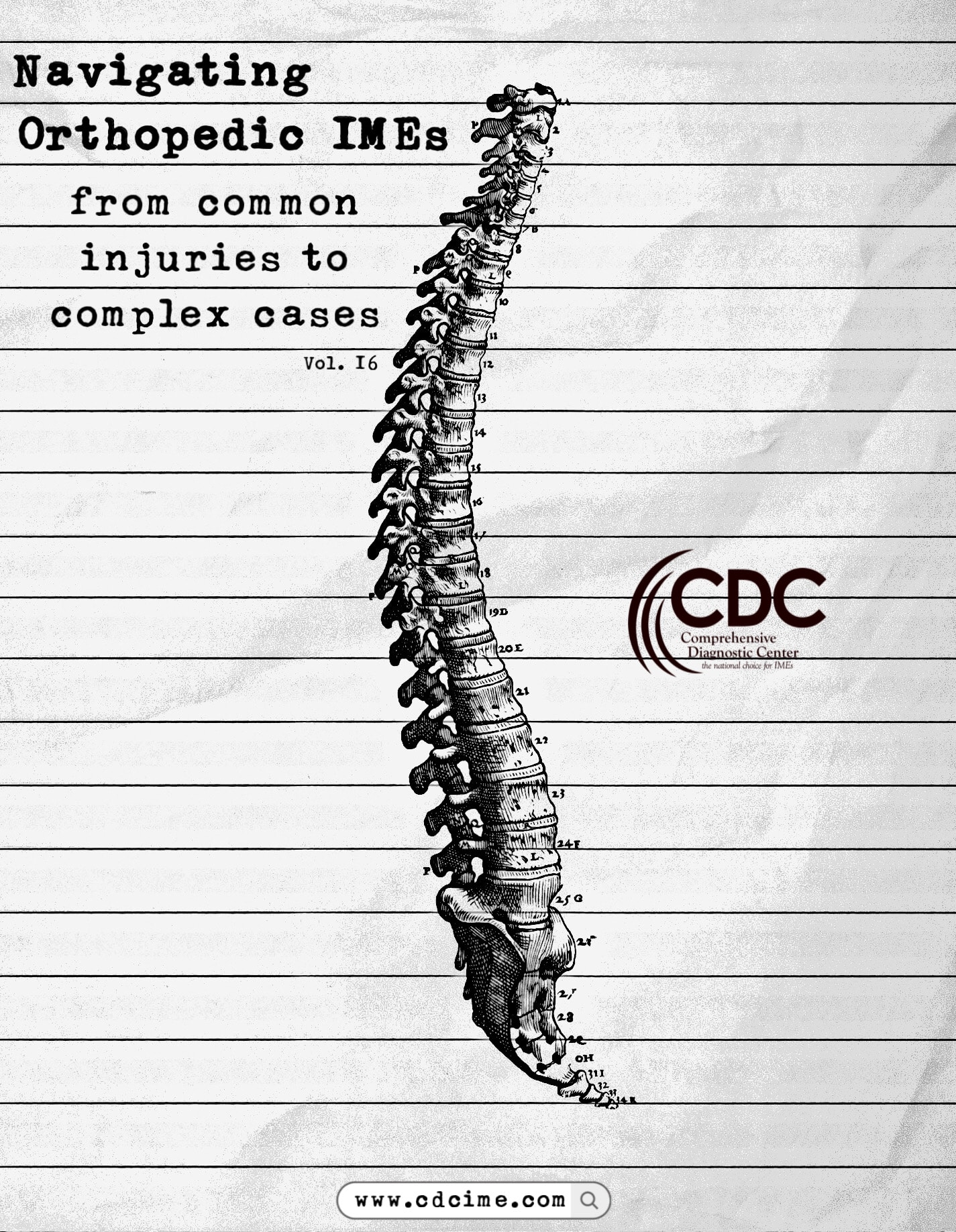
Navigating Orthopedic IMEs: From Common Injuries to Complex Cases

Orthopedic injuries represent a large portion of workers’ compensation, personal injury, and disability claims. From routine sprains and fractures to complex multi-level spine cases, joint replacements, and post-surgical complications, orthopedic Independent Medical Evaluations (IMEs) require specialized expertise to address causation, impairment, treatment necessity, and work capacity accurately.
This blog provides practical guidance on when and how to use orthopedic IMEs effectively across the spectrum of injury complexity.
Common Orthopedic Injuries in Claims
Typical cases include:
- Shoulder rotator cuff tears or impingement
- Knee meniscus or ligament injuries
- Lumbar or cervical spine disc herniations and stenosis
- Fractures and soft-tissue trauma from slips, falls, or motor vehicle incidents
In straightforward cases, IMEs help confirm diagnosis, assess healing progress, and determine return-to-work status.
Challenges in Complex Orthopedic Cases
More challenging scenarios often involve:
- Pre-existing degenerative conditions aggravated by work
- Multiple surgeries or failed interventions
- Overlapping injuries (e.g., shoulder + cervical spine)
- Questions of maximum medical improvement (MMI) and permanent impairment rating
In these situations, an experienced orthopedic surgeon or subspecialist can provide critical analysis using current guidelines, advanced imaging correlation, and functional assessment.
Best Practices for Effective Orthopedic IMEs
- Match the examiner’s subspecialty to the injury (e.g., spine surgeon for back cases, hand specialist for upper extremity)
- Supply complete records, serial imaging, and operative reports
- Ask focused referral questions about causation, apportionment, and future care needs
- Consider combining with diagnostic film review or FCE when function is disputed
Properly conducted orthopedic IMEs deliver clear, evidence-based opinions that withstand scrutiny and facilitate timely resolutions.
Conclusion
From routine sprains to highly complex reconstructive cases, orthopedic IMEs remain essential for objective assessment in workers’ compensation and personal injury claims. Choosing the right specialist and providing thorough documentation are key to obtaining reliable, defensible results.
At Comprehensive Diagnostic Center (CDC), we maintain a robust national panel of board-certified orthopedic surgeons and subspecialists experienced in the full range of orthopedic evaluations. We ensure rapid scheduling, seamless record coordination, and detailed reports tailored to your specific questions.
Let CDC help you navigate both common and complex orthopedic claims with confidence and efficiency. Contact us today at 800-494-0321, email referrals@cdcime.com or records@cdcime.com, or use our 24/7 scheduling portal at www.cdcime.com to schedule your next orthopedic IME.
References
- American Academy of Orthopaedic Surgeons (AAOS). Clinical Practice Guidelines.
- American Medical Association. Guides to the Evaluation of Permanent Impairment, 6th Edition – Musculoskeletal chapter.
- Workers’ Compensation Research Institute (WCRI). Orthopedic and musculoskeletal claims trends.
- North American Spine Society (NASS). Evidence-based guidelines for spine care.
- Occupational Medicine Practice Guidelines (Musculoskeletal disorders).